Maxwill Display Font for Handmade & Printable Creations
If you've ever spent hours tweaking letter spacing on a candle label only to find it still looks flat—or agonized over which font gives your wedding welcome sign that perfect balance of boldness and charm—you’ll love Maxwill. It’s not just another display font. It’s the kind of typeface that makes your physical products feel instantly more intentional, more premium, and unmistakably *yours*.
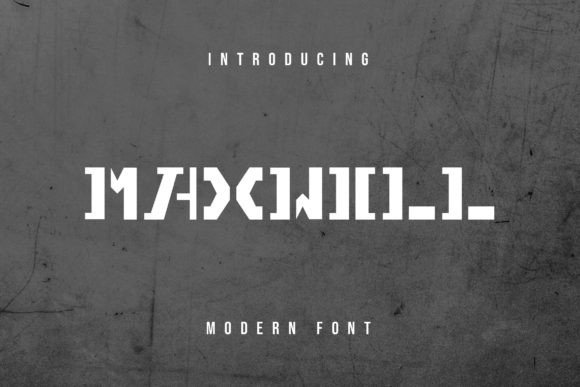
Maxwill is a modern, cool display font with strong, confident characters and clean lines. Its bold weight carries presence without sacrificing clarity—even at smaller sizes—and its stylish details (think subtle flares on uppercase letters and balanced proportions across lowercase) add personality without veering into fussiness. It doesn’t shout; it commands attention with quiet confidence. That’s exactly what handmade sellers need: a font that elevates your work while staying rooted in readability and real-world use.
Where Maxwill Shines in Your Physical & Digital Products
Because Maxwill is built as a display font—not a body text font—it thrives where impact matters most. Think of it as your go-to for anything customers see first: the headline on your printable planner cover, the name on a boutique gift tag, or the title on a Cricut-cut wooden sign. Here’s how it translates across your most common projects:
- Candle & soap labels: Maxwill holds up beautifully on small adhesive stickers—even down to 14–16pt—thanks to its generous x-height and open counters. Try it for scent names (“Sage & Sea Salt”) or brand lines (“Hand-Poured in Portland”).
- Wedding stationery: Use Maxwill for “Mr. & Mrs.” on save-the-dates or “Welcome” on a farmhouse-style chalkboard sign. Its bold look reads clearly from across a venue, and its modern edge keeps things fresh—not fussy.
- Digital printables: Whether you’re designing wall art for Etsy or editable Canva templates, Maxwill adds instant visual hierarchy. Pair it with a light sans serif for captions and you’ve got a cohesive, shop-ready layout.
- SVG files & cutting machine projects: The clean outlines and minimal serifs make Maxwill highly cut-friendly for Silhouette Studio and Cricut Design Space. No fragile loops or thin connectors to snag mid-cut.
- Product packaging & tags: On kraft paper bags, linen pouches, or recycled cardstock tags, Maxwill’s boldness ensures legibility even when printed with subtle ink bleed or uncoated stock.
Readability Tips You’ll Actually Use
Yes, Maxwill is bold—but bold doesn’t mean blurry. For best results:
- Stick to short phrases: names, titles, slogans, and headings. Avoid full paragraphs—it’s a display font, not a workhorse text face.
- On stickers under 1.5 inches wide, use all caps and keep it to 1–3 words (“Joy”, “Made With Love”, “Local Honey”).
- When layering vinyl or heat transfer on mugs or tote bags, increase letter spacing (tracking) by +20–+40 units in your design software—this prevents visual crowding and helps the eye parse each character cleanly.
- In mockups, preview at actual print size. Maxwill shines at 24pt and up for signs and posters, but also holds integrity at 18pt for folded invitation covers or 16pt for front-of-pack product labels.
Smart Pairings That Build Brand Consistency
Maxwill works especially well when paired intentionally—not just for contrast, but for cohesion. Try these combinations in your templates and branding:
- With a relaxed handwritten font: Use Maxwill for headlines (“Summer Collection”) and a friendly script for subheads (“Hand-picked • Small-batch • Made in Ohio”). This combo feels personal yet polished.
- With a clean sans serif: Pair Maxwill with a neutral, geometric sans (like Montserrat or Poppins) for body text, pricing, or fine print. You get impact + clarity—ideal for digital downloads and product listings.
- With a soft serif: For vintage-inspired stationery or apothecary labels, set Maxwill alongside a gentle serif like Playfair Display. The contrast feels considered, not chaotic.
Licensing & Practical Notes for Sellers
Maxwill is a commercial font—meaning you’re fully covered to use it in physical products you sell (candles, shirts, mugs), digital downloads (printables, Canva templates, SVG bundles), client work, and social media graphics. Just be sure your license includes commercial use (most reputable font shops do—check before purchasing). You may not resell or redistribute the font file itself, but everything you *create* with it? That’s yours to sell, share, and scale.
Since Maxwill is described as a modern display font with stylish characters and bold presence, confirm the download includes OTF and TTF formats for maximum compatibility across design tools—and if alternates or ligatures are included, test them early in your workflow. They can add subtle distinction to repeated words (“The The” → “The” with a custom connection) and elevate your most popular designs.
Why Maxwill Fits Your Shop—Not Just Your Software
This isn’t about chasing trends. It’s about choosing a typeface that supports your values: craftsmanship, clarity, and connection. When a customer sees Maxwill on your lavender-scented soy candle label, they don’t just read “Lavender Fields”—they register care, consistency, and confidence. That impression sticks. It builds recognition across your product line, strengthens your brand identity, and quietly tells shoppers: *This maker pays attention to detail.*
Whether you're laser-cutting farmhouse signs in your garage, uploading digital planners to Etsy, or hand-lettering wedding invites for local couples—Maxwill gives your work a grounded, contemporary voice. It’s bold enough to stand out on a crowded shelf, refined enough to feel intentional on a delicate thank-you card, and versatile enough to grow with your shop.
If your current display fonts feel either too stiff or too whimsical—if they don’t quite say *you*—give Maxwill a try. Load it into your next label mockup, drop it onto a seasonal SVG bundle, or test it on a sample batch of greeting cards. You’ll feel the difference right away: less second-guessing, more certainty, and more time spent creating—not correcting.